
The Signal Q2 2026: Open Networks, AI Foundations, and FYUZ Momentum


Q2 was a quarter of momentum across Telecom Infra Project. Our members advanced technical requirements, refreshed workstreams, expanded leadership, and continued building the operating foundations needed to scale open, disaggregated, and AI-enabled telecom infrastructure.
In this edition of The Signal, we’re highlighting updates across Video QoE Management, OpenLAN, OpenRAN, OpenHOST, OOPT, TelcoAI, Data & AI Foundations, FYUZ 2026, and the launch of TIP’s new podcast, The Signal Boost.
Welcoming new TIP participant organizations

TIP continues to grow through organizations bringing deployment experience, technical depth, and ecosystem perspective into our Project Groups, events, and community programs. Please join us in welcoming the newest participant organizations into the TIP community.TIP continues to grow through organizations bringing deployment experience, technical depth, and ecosystem perspective into our Project Groups, events, and community programs. Please join us in welcoming the newest participant organizations into the TIP community.

FYUZ 2026: The Seattle program is taking shape
FYUZ 2026 will bring the TIP community to The Westin Seattle, November 3-5, under the theme Together We Scale. The agenda and call for papers are live, with content organized around three major themes: Proof at Scale, The AI Network, and What’s Next.
The high-level agenda spans Project Group community meetings on Day 0, Telco Data, Open Networks & AI Foundations on Day 1, QoE, Distributed Inference & Telco’s Big Bets on Day 2, and The Road to 6G on Day 3.
The first speaker announcement is live, bringing together leaders from operators, cloud providers, infrastructure innovators, government, analysts, and technology partners. Confirmed speakers include Rob Soni, Bernard Bureau, Kaniz Mahdi, Chad Archer, Abdel Bagegni, Kunal Bajaj, Joel Brand, Dan Druta, Dr. Simon Lok, Arturo Mayoral López de Lerma, Chris Murphy, Melissa Ness, Nkosinathi Nzima, Sushil Rawat, Chetan Sharma, Shinya Shimada, Yago Tenorio, Kristian Toivo, Amanda Toman, and Yawei Yin, with more announcements coming soon.
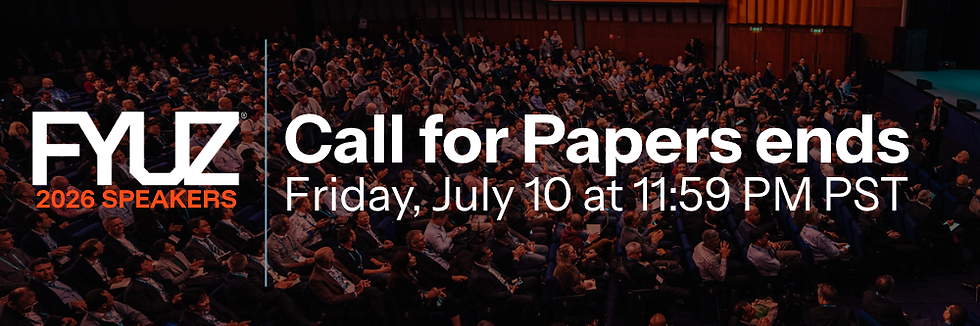
Speaker proposals remain open through Friday, July 10 at 11:59 PM PST, with decisions shared by Friday, July 24. Submissions should be grounded in deployment experience, technical depth, operational insight, measurable outcomes, emerging research, or ecosystem collaboration.
Sponsor and exhibitor opportunities are open
FYUZ sponsorship packages are designed to help partners show up across the full event experience, from mainstage conversations and exhibition space to onsite branding, digital amplification, newsletter visibility, podcasts, and private meeting opportunities.
For organizations looking to reach operators, vendors, integrators, researchers, AI leaders, and public-sector stakeholders shaping deployment-ready networks, FYUZ offers a high-signal environment to connect with the right audience.
Thank you to the FYUZ 2026 sponsors already helping bring this year’s program to life: 1Finity, Canonical, DriveNets, Hiya, Insta, Intel, RG Nets, and Zinkworks.

Across the TIP community, Project Groups continued moving technical priorities from alignment into execution. Here are the Q2 highlights.
Video QoE Management: Building common ground for application experience
The Video QoE Management Project Group continues to advance a shared industry approach to measuring, managing, and optimizing end-to-end application Quality of Experience across telecom networks, starting with video and expanding toward voice and messaging over time.
The group’s work remains practical: define a common, industry-adoptable set of video QoE metrics, improve CAP-CSP information exchange, and develop guidance that helps networks and applications work together more effectively under real network conditions.
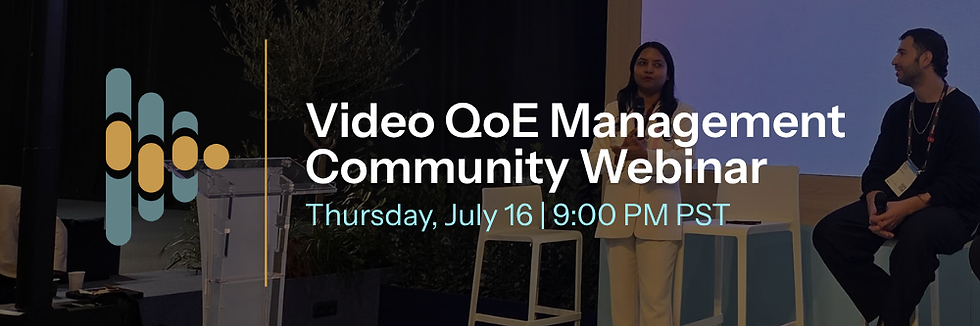
Join us on July 16 at 9:00 PM PST for an introduction to the community, our ongoing work, and how to get your organization involved.
OOPT: New leadership and new momentum for open transport
The Open Optical & Packet Transport community welcomed François Moore of 1Finity, a Fujitsu Company, to its Project Group leaRdership team. His addition strengthens the group’s operator- and ecosystem-led work across open optical and IP transport technologies.
OOPT also published the technical requirements for the Disaggregated Aggregation Router, advancing a new blueprint for open, flexible, and future-ready IP transport. The DAR requirements cover hardware, software, management, programmability, security, and deployment models, and TIP is launching a Requirements Compliance Evaluation process for manufacturers to demonstrate alignment with the specification.
The MANTRA subgroup is also engaging with the IETF IVY Hackathon community around open transport and network inventory work, reinforcing TIP’s role in connecting practical deployment needs with standards and open-source collaboration.
OpenRAN: Advancing common test plans and subgroup priorities
The OpenRAN Project Group remains focused on accelerating commercialization of interoperable, multi-vendor RAN solutions that are easier to integrate, validate, and deploy across operator networks.
Q2 activity includes continued subgroup work around deployment-oriented requirements, blueprint development, and test-plan readiness. In June, the OpenRAN Solutions subgroup released Small Cell End-to-End Test Plan, Version 2, an updated framework designed to help operators, vendors, system integrators, and labs validate disaggregated 5G NR small cell systems against common expectations for interoperability, performance, energy efficiency, operational readiness, and resiliency.
OpenLAN: Advancing production-ready open enterprise networking
OpenLAN continues to build open, interoperable networking solutions that reduce vendor lock-in and support production-ready enterprise deployments. The community’s work spans OpenWiFi, OpenLAN Switching, and OpenLAN Gateway, creating a broader foundation for open WLAN, LAN, and WAN environments.
Q2 highlights show the community turning proof in production into deeper operational maturity. At the 2026 OpenLAN Global Summit, the community highlighted production deployments across enterprise and hospitality, the full OpenLAN blueprint across OpenWiFi, OpenLAN Switching, and OpenLAN Gateway, and a multi-continent engineering ecosystem shipping production code.
The community also shared its journey to PKI 2.0, a rebuild of OpenLAN’s trust infrastructure supporting device identity, controller trust, zero-touch provisioning, cloud discovery, migration paths, and recovery planning. In June, OpenLAN released OpenWiFi LTS v4.2, advancing a long-term support foundation for production-ready wireless infrastructure through real-world validation, Wi-Fi 6, Wi-Fi 6E, and Wi-Fi 7 interoperability, security, roaming, capacity, telemetry, and resiliency testing.
Read the OpenWiFi LTS v4.2 update | Read the PKI 2.0 update | Read the OpenLAN Global Summit recap | Explore OpenLAN
OpenHOST: Rechartering shared infrastructure for wireless and wireline networks
The OpenHOST community is sharpening its role as a collaborative home for neutral, shared, and open telecommunications infrastructure across both wireless and wireline networks.
The recharter reflects a broader ecosystem view, bringing together operators, infrastructure providers, technology partners, system integrators, venue owners, municipalities, and policy stakeholders. This work supports scalable, cost-efficient connectivity across fiber, small cells, DAS, and in-building digital infrastructure, with an emphasis on reducing deployment complexity and enabling future-ready shared infrastructure models.
TelcoAI: Turning AI ambition into operator-ready use cases
The TelcoAI Project Group continues to focus on helping operators use AI faster and at scale. The current direction centers on practical operator use cases, architecture blueprints, data accessibility, data governance, and ecosystem alignment across edge, regional, centralized, and public cloud environments.
Following its April webinar, the group is moving toward the technical requirements and deployment patterns needed to support AI-enabled telecom networks in real environments.
Data & AI Foundations: Expanding leadership for secure, scalable AI-native networks
The Data & AI Foundations Project Group is building the cross-domain data and AI foundation needed for secure, scalable, trustworthy AI-native telecom networks. Its scope includes federated AI collaboration, Network Language Models, AI agents, cross-domain data frameworks, benchmarking, validation, and ecosystem alignment.
In Q2, the group welcomed Dr. Krishna Gomadam of Meta to its leadership team, strengthening the community’s focus on privacy-preserving collaboration, telecom-specific AI models, and cross-domain frameworks for RAN, transport, fixed access, and core networks.
Listen to The Signal Boost

Released episodes of The Signal Boost highlight the people, projects, and companies helping move open and disaggregated telecom infrastructure from ideas into deployment-ready work. The series gives the TIP community another way to share practical progress, member perspectives, and ecosystem stories. If your organization is contributing to TIP and would like to have your company’s work featured, contact us at membership@telecominfraproject.com.
Get involved
There are several ways to connect with the TIP community as this work moves forward: join us at FYUZ 2026 in Seattle, explore sponsorship and exhibition opportunities, contribute to a Project Group, or share your organization’s work through The Signal Boost.


